
The Physical Backbone of AI: Precision Manufacturing for Fiber Optic Infrastructure
As artificial intelligence drives an unprecedented surge in data center demand, a critical constraint is emerging: the physical infrastructure required to move data at scale. While AI is often discussed in terms of algorithms and compute, its continued growth depends just as heavily on the performance and reliability of the fiber optic systems connecting it.

Artificial intelligence is often described abstractly through models, training cycles, and rapidly scaling processing power. But behind every AI breakthrough lies a very real requirement: the ability to move massive volumes of data quickly, reliably, and continuously. As AI workloads expand, the performance of data centers increasingly depends on the strength of their underlying fiber optic infrastructure.
While software captures headlines, fiber optics form the physical backbone of AI. As data rates climb and architectures become denser, the precision of the mechanical components supporting these systems has become just as critical as the optics themselves. This is where precision manufacturing for fiber optic infrastructure becomes critical.
AI’s Growth Is Limited by Physical Infrastructure
AI data centers are fundamentally different from traditional computing environments. They demand ultra-low latency, extreme bandwidth, and uninterrupted uptime. As racks grow denser and thermal loads increase, even small inefficiencies or inconsistencies in physical components can ripple across entire systems.
At the core of this challenge is data movement. Optical interconnects must perform flawlessly at high speeds, often over extended operating lifetimes. That performance depends not only on optical design, but also on the mechanical precision of the components that align, secure, and protect optical pathways.
As hyperscale data centers expand and deployment timelines compress, the tolerance for variability in physical components continues to shrink. In this environment, reliability at scale has become a defining requirement.
Fiber Optics: Precision Beyond the Glass
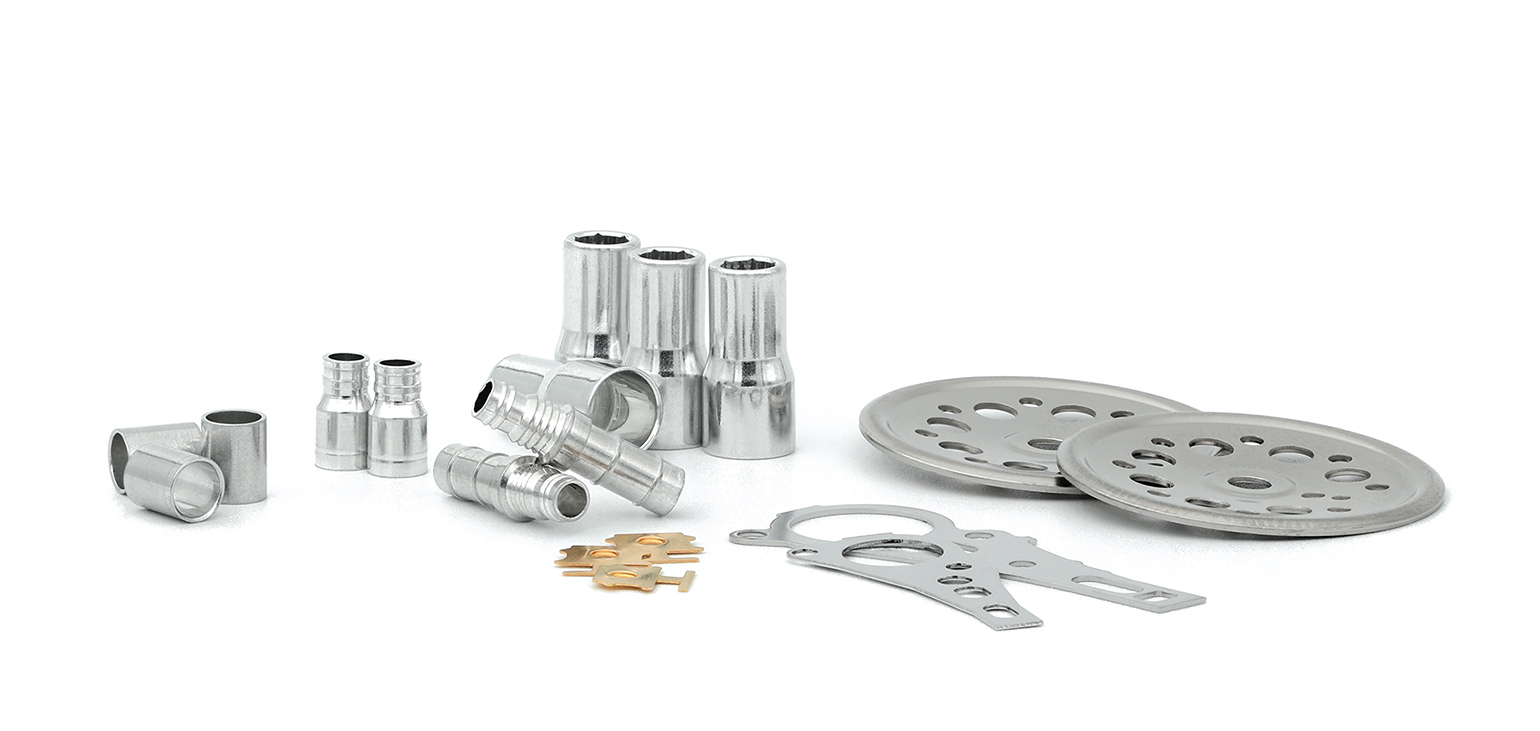
Fiber optic systems rely on more than glass and light. They depend on precision-engineered metal components that maintain alignment, protect sensitive interfaces, and ensure long-term stability in demanding operating conditions.
Small deviations in flatness, concentricity, or surface condition can affect signal integrity, insertion loss, or thermal behavior. Over thousands or millions of interconnects, these variations compound. The result can be performance degradation, increased maintenance, or unexpected downtime.
This is where precision manufacturing for AI fiber optic infrastructure becomes a functional requirement rather than a supporting process. The performance of fiber optic components for AI is directly tied to the consistency and quality of the mechanical components that support them.
Where Precision Manufacturing Makes the Difference
High-speed optical systems demand manufacturing capabilities that go far beyond traditional metal forming. Components must be produced with:
- Tight dimensional control to ensure consistent optical alignment
- Exceptional surface quality to support clean interfaces and stable assembly
- Material integrity that withstands thermal cycling and long service lifetimes
- Repeatability at scale to support large data center deployments
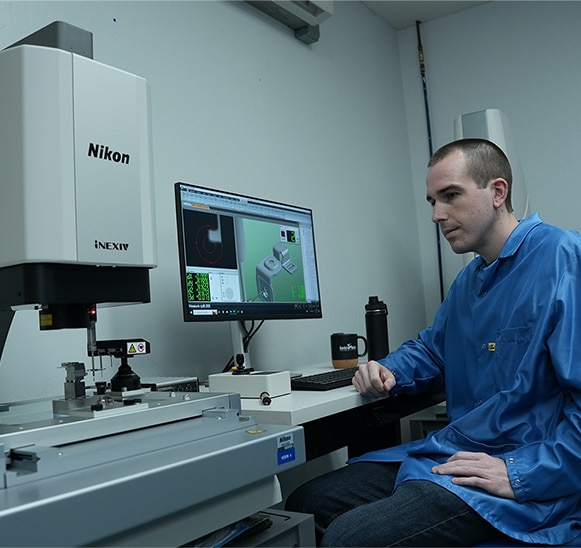
Achieving this level of performance requires more than advanced equipment. It demands deep process control, custom tooling, and inspection methods capable of verifying features measured in microns.
Proven Experience in High-Precision Environments
For IntriPlex Technologies, these requirements are not new. For decades, the company has supplied ultra-precise stamped components to the data storage industry, where cleanliness, consistency, and micro-scale tolerances are non-negotiable. That same manufacturing discipline supports IntriPlex’s work in fiber optic components for AI infrastructure today.
By designing tooling in-house, controlling forming processes, and maintaining rigorous inspection standards, IntriPlex produces components that perform reliably in some of the most demanding technological environments. This foundation enables the company to support fiber optic infrastructure that must scale alongside AI without sacrificing performance or reliability.
Scaling AI Requires Manufacturing Confidence
As AI-driven data center expansion accelerates, manufacturers face a difficult balance: increasing volume rapidly while maintaining uncompromising quality. In these systems, mechanical inconsistency can undermine even the most advanced optical designs.
Precision manufacturing partners play a critical role in reducing that risk. When components are engineered with consistency in mind from the outset, downstream assembly stabilizes, field performance improves, and long-term reliability increases.
This is especially important as AI infrastructure becomes more standardized and modular. High-volume deployment amplifies the consequences of even minor variation.
Building the Foundation for What Comes Next
The rapid growth of AI is reshaping digital infrastructure, but its success depends on physical systems that can keep pace. Fiber optics will continue to serve as the connective tissue of high-performance computing, and the precision of the components behind those systems will define their limits.
By applying decades of expertise in precision manufacturing for AI infrastructure, IntriPlex supports the technologies that make AI possible, quietly, reliably, and at scale. As demand accelerates, the companies best positioned to succeed will be those that understand progress depends not only on code and compute, but on the precision and scalability of the physical systems that make that progress possible.