Why Optical Interconnect Reliability Limits AI Data Center Performance
As AI systems scale, most of the attention stays on compute power, model performance, and energy use. But one less-discussed factor is becoming harder to ignore: the reliability of the optical interconnects that move data between systems.
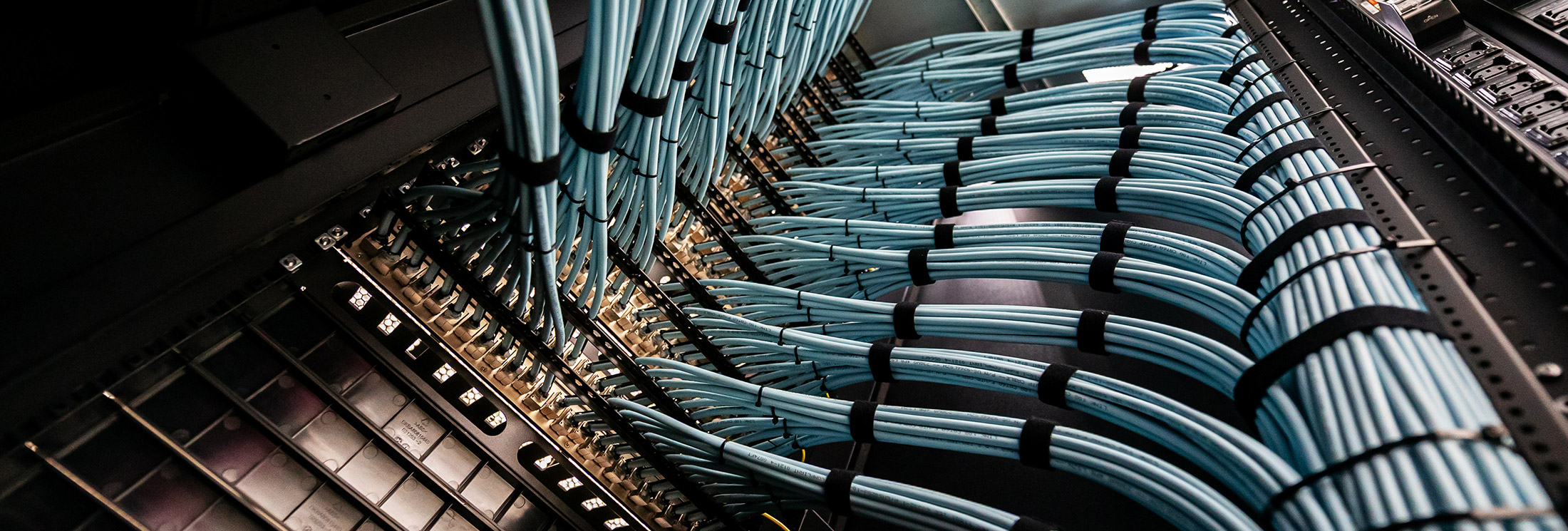
In high-performance computing, moving data is just as important as processing it. Optical interconnects are the pathways that link servers, switches, and storage so AI workloads can run at the required speeds. When those links are reliable, the system can operate as designed. When they aren’t, problems can spread quickly across the data center. As AI infrastructure grows, reliability stops being a secondary concern and becomes one of the main limits on overall performance.
For a broader look at how the physical systems supporting AI are manufactured, see our article, The Physical Backbone of AI: Precision Manufacturing for Fiber Optic Infrastructure.
What Optical Interconnects Enable
Optical interconnects are the communication backbone of modern data centers. They carry high-speed data across dense architectures, keeping compute resources in constant contact. In AI environments, those links have to deliver low latency and high bandwidth while operating continuously under growing data loads. When those pathways falter, delays and errors can spread through the system. The result is lower reliability across the data center.
Reliability as a System-Level Constraint
In traditional computing environments, an isolated component failure could often be contained before it spread. In AI data centers, that margin is disappearing. As systems grow, interconnect density rises and architectures become more tightly linked. Small inconsistencies at the component level can then move through an assembly, affecting signal transmission and adding latency. At this scale, minor variations become system-level problems. Optical interconnect reliability is less about preventing a single failure and more about delivering consistent performance across millions of connections at once.
Where Optical Interconnect Reliability Breaks Down
The performance of optical interconnects depends on more than the optical design itself. How well those systems perform over time also comes down to mechanical precision and manufacturing consistency.
Alignment and Tolerance Stack-Up
Optical systems require precise alignment to maintain signal integrity. Even micron-level deviations affect how light is transmitted between components. Across an assembly, those small variations can accumulate into tolerance stack-up and affect overall performance. For perspective, a human hair is roughly 70 microns in diameter. Many optical assemblies depend on alignment measured in only a fraction of that distance.
Surface Quality and Interface Stability
Interfaces between fiber optic components must stay clean and stable. Surface imperfections or inconsistencies can introduce signal loss and increase the risk of contamination. Even post-processing steps such as deburring and cleaning need careful control. Mechanical tumbling media, for example, must smooth edges effectively without becoming lodged inside small internal features. Details like these may seem minor, but they can determine whether a component is clean and ready for reliable assembly. Over time, small issues can lead to signal loss, lower efficiency, and higher maintenance.
Thermal Cycling and Mechanical Stress
Data centers generate significant heat, creating repeated cycles of expansion and contraction. Those temperature changes can shift component alignment and affect long-term stability, especially when materials or geometries are not designed to handle them.
Variability at Scale
As production volumes rise, maintaining consistency requires tighter control of the manufacturing process. Minor dimensional shifts can occur during a production run, so real-time monitoring helps catch them early and make adjustments before they result in significant variation or yield loss.
The Role of Mechanical Precision
Optical design determines how data is transmitted. Mechanical precision determines whether that performance holds up consistently. Well-engineered components keep optical pathways aligned, interfaces stable, and assemblies performing as intended over long service lives. Without that control, even a well-designed optical system can experience performance variability. That makes mechanical precision a foundational part of optical interconnect reliability. As AI infrastructure scales, maintaining that precision across millions of components becomes just as important as achieving it on a single part.
Manufacturing Consistency at Scale
The move to hyperscale data centers has raised the stakes for manufacturing consistency. In smaller systems, some variability can still be absorbed or corrected later. At hyperscale, that is no longer practical. When millions of precision components are needed, consistency has to be built into the manufacturing process from the start, not inspected into the product afterward. That means more than holding parts to specification. It means continuously monitoring the process so small shifts are caught and corrected before they result in significant variation or yield loss. The result is more stable assemblies and more predictable performance over the life of the system.
Proven Experience in High-Precision Environments
For IntriPlex Technologies, these manufacturing challenges are familiar. The company has long supported industries that demand precision, cleanliness, and consistency, including data storage environments that operate under similarly strict conditions.
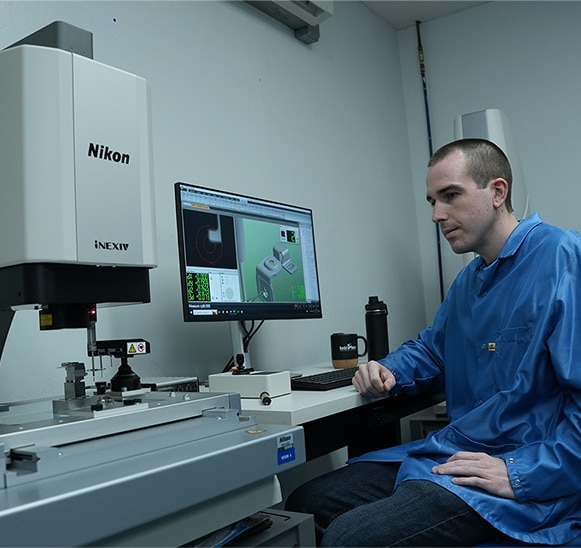
Precision, in practice, means holding stable dimensional results within tight tolerance windows across millions of units. An accurate first part is only the beginning. By designing tooling in-house, maintaining strict process control, and verifying performance at the micron level, IntriPlex produces components that meet the requirements of high-speed, high-reliability optical interconnect systems.
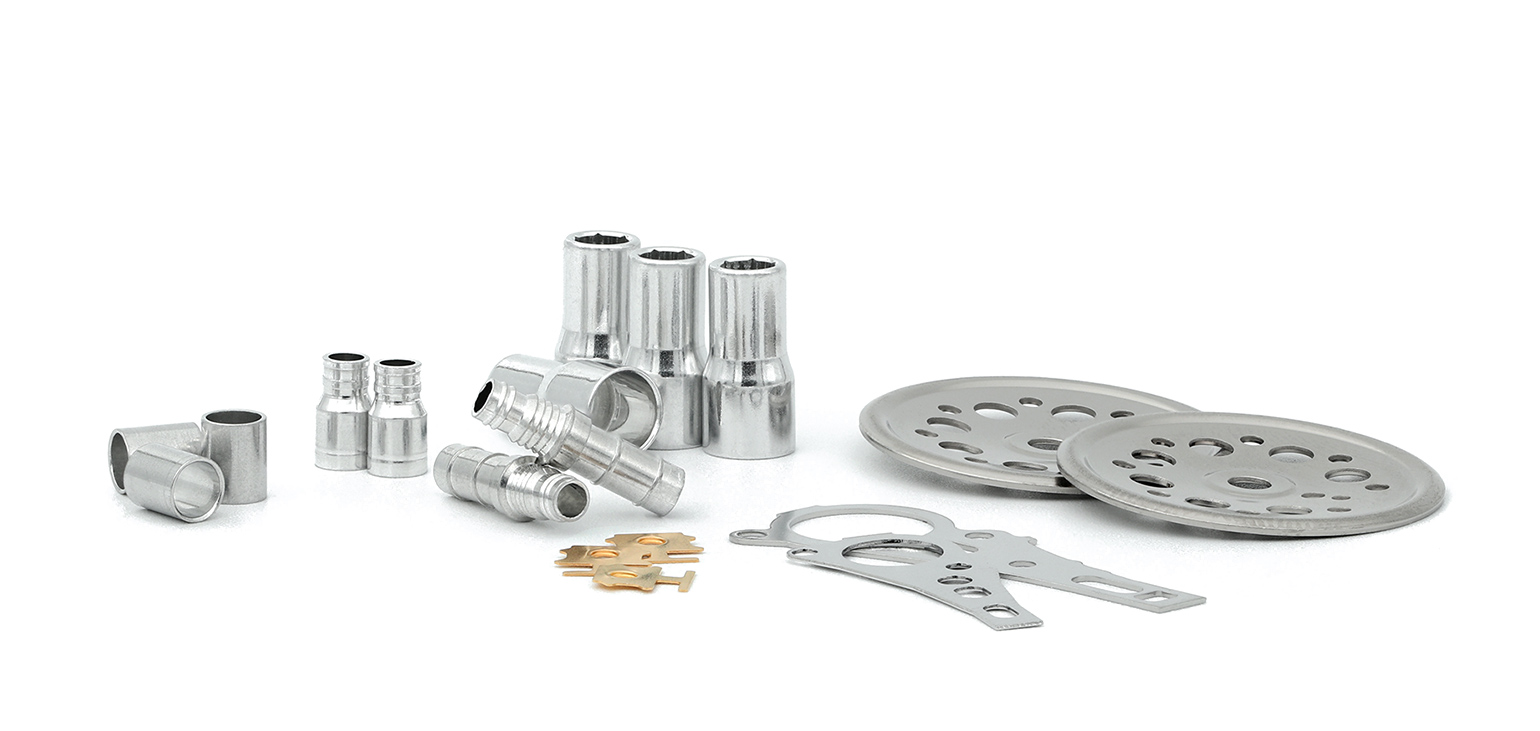
This expertise made it possible for IntriPlex to develop tooling for a fiber optic rear body whose features had long been considered unstampable. Until then, the part had only been made by machining. The stamping process runs at least 25 times faster than CNC machining while maintaining consistency across millions of parts and reducing production costs. That capability—finding a way to produce a complex fiber optic component at high volume when its features were previously considered unstampable—is central to how IntriPlex approaches manufacturing.
IntriPlex developed tooling to precision stamp a fiber optic rear body whose features had previously been considered unstampable. The stamping process runs at least 25× faster than CNC machining while maintaining consistency across millions of parts.
As investment in AI data centers grows, so does demand for the fiber optic systems that support them. Meeting that demand requires manufacturing partners who can deliver precision components with consistent dimensional quality at high volume. Through high-speed stamping, real-time quality monitoring, and disciplined process control, IntriPlex helps customers reach the production volumes, consistency, and cost efficiency these systems require.
Reliability Defines What Scales
As AI data centers expand, optical interconnect reliability will matter more in determining what systems can actually deliver. Speed and bandwidth are still essential, but without reliability, those advantages don’t last. The systems that succeed will be built for consistent performance over time and at scale, not just peak performance. Optical interconnect reliability, supported by precision manufacturing, will be one of the factors shaping how far AI infrastructure can scale.